Hypersonics & Advanced Systems Testing
ENGINEERING AT SPEED
Canvas engineers and executes mission-critical hypersonic and advanced systems testing in environments where performance margins are measured in milliseconds and millimeters. Our teams operate at the intersection of design, test, and analysis, delivering real-time insight, cross-domain integration, and technical precision across the most complex ground and flight test environments.
Test Technique Development:
Canvas designs, validates, and executes advanced test techniques for hypersonic and high-speed systems. Our work spans nozzle, inlet, aftbody, and fuel integration across ground test facilities, incorporating stress, structural, electrical, and systems engineering to ensure accurate data capture and repeatable test execution.
Wind Tunnel Testing:
We evaluate vehicle performance and stability across subsonic, transonic, supersonic, and hypersonic regimes. Canvas supports force and moment testing, pressure measurements, inlet integration, jet effects, store separation, and heat transfer analysis to inform design refinement and validate performance across the flight envelope.
Advanced Materials & Aerothermal Testing:
Canvas assesses material performance and thermal response under extreme heating and pressure conditions representative of hypersonic flight. Our teams evaluate advanced materials, coatings, and structural concepts to understand aerothermal loads, durability, and system survivability during high-speed operations.
Modeling, Simulation, & Computational Fluid Dynamics (CFD):
We apply high-fidelity modeling and simulation tools, including Computational Fluid Dynamics (CFD) and High-Performance Computing (HPC), to enable predictive analysis, test planning, and performance validation. Canvas integrates modeling results with test data to reduce uncertainty and accelerate system maturation.
Signature Analysis & Survivability:
Canvas addresses radar and thermal signature challenges for reentry vehicles, missiles, and high-speed platforms. Through measurement, modeling, and simulation, we deliver survivability assessments that inform design trades, mission planning, and counter-threat considerations.
Propulsion Testing at Flight Temperatures & Pressures:
We conduct high-enthalpy, high-Mach ground testing of SCRAMjet, RAMjet, and air-breathing propulsion systems. Canvas evaluates propulsion integration, thermal loads, and system durability under flight-representative conditions to support reliable operation at extreme speeds.
Directed Energy & HEL Integration:
Canvas supports hypersonic weapon systems incorporating Directed Energy technologies, including High-Energy Laser components. Our teams assess power generation, thermal management, and system integration strategies to ensure compatibility with high-speed platforms.
Flight Test & Range Execution:
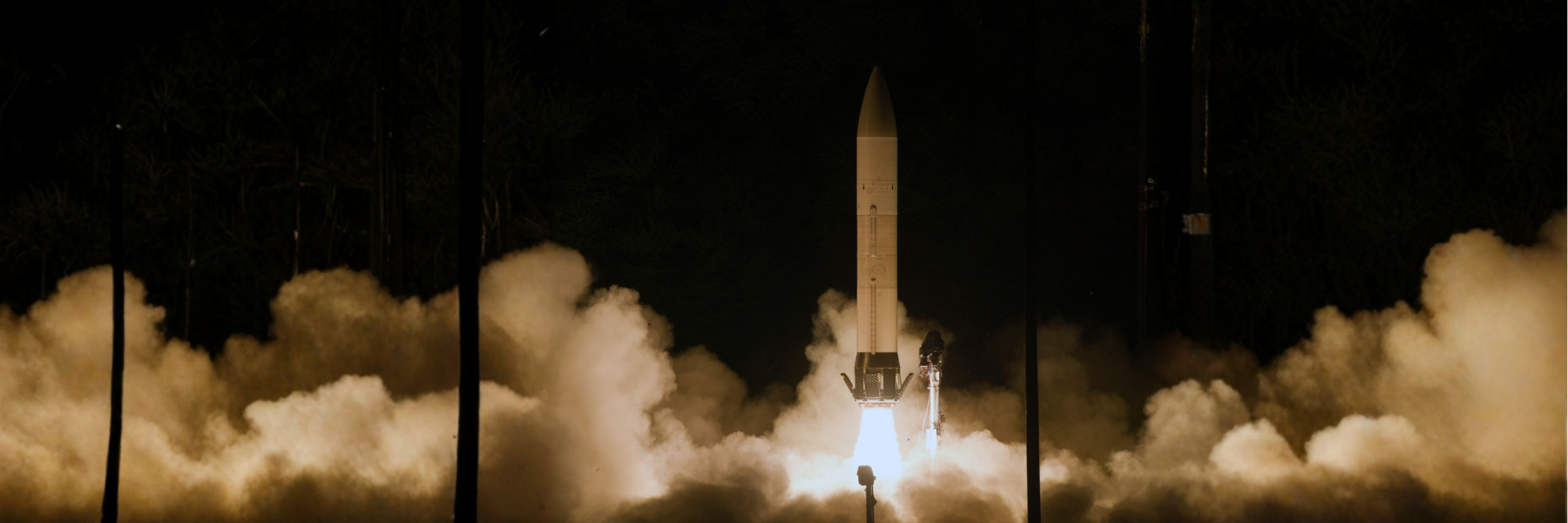
We integrate sensors, telemetry, and instrumentation to support hypersonic and advanced weapon flight demonstrations. Canvas provides range execution support to ensure data integrity, safety, and mission success during complex test events.
Post-Test Data Collection & Analysis:
Canvas delivers rapid-turn technical insight through integrated post-test data collection, analysis, and reporting. Our teams provide actionable results that inform follow-on test events, system refinements, and transition to operational capability.
Proven Success
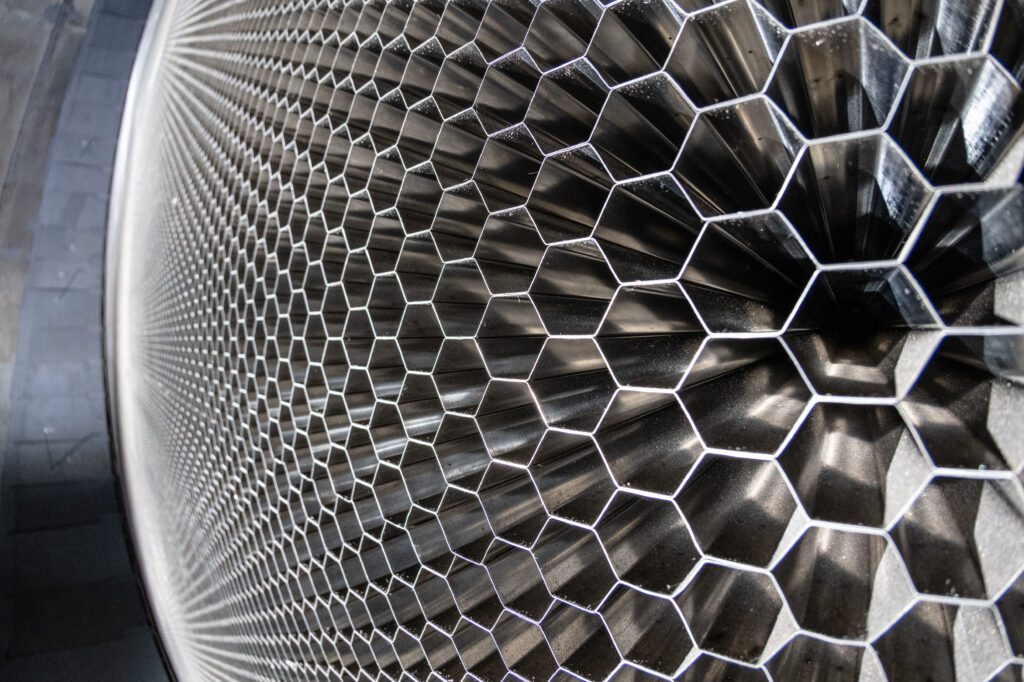
Canvas engineers, including a Canvas AEDC Fellow with deep subject matter expertise, led the development of advanced technical requirements for a new wall veneer solution in the 16S supersonic wind tunnel. The team addressed a long-standing challenge associated with shock wave reflections from tunnel walls, which can interfere with flow quality during high-speed testing.
The resulting approach mitigates shock wave interference to preserve flow uniformity and measurement fidelity, particularly during complex store separation events. Once fully implemented, the solution enables a new store separation test capability and expands the tunnel’s role as a critical national asset supporting the development and advancement of the nation’s supersonic and hypersonic weapon systems.